Department of Mechanical Engineering • MNIT Jaipur

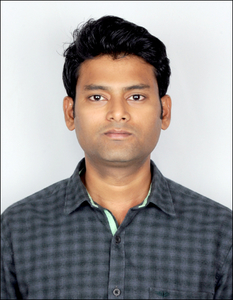
Dr. Manish Kumar

Assistant Professor, Department of Mechanical Engineering, MNIT Jaipur

Signature Research Specialization

Pioneering advanced numerical algorithms in Computational Fluid Dynamics (CFD), specifically the Sharp Interface Immersed Boundary Method (IBM) for moving/deformable boundaries, cut-cell mass conservation, and high-performance parallel computing.

Dr. Manish Kumar - Assistant Professor, Mechanical Engineering, MNIT Jaipur
Department of Mechanical Engineering MNIT Jaipur • Ph.D. IIT Patna

Biography & Research Trajectory

Specializing in Computational Fluid Dynamics, numerical heat transfer, immersed boundary methods, and high-performance scientific computing.

Research Trajectory

Dr. Manish Kumar is an Assistant Professor in the Department of Mechanical Engineering at Malaviya National Institute of Technology (MNIT) Jaipur. He earned his Ph.D. in Mechanical Engineering from the Indian Institute of Technology Patna (IIT Patna) in 2016, where his doctoral thesis pioneered rigorous numerical methodologies for Sharp Interface Immersed Boundary Methods (IBM) applied to moving and deformable boundaries in incompressible viscous flows.

His research lies at the intersection of Computational Fluid Dynamics (CFD), High-Performance Computing (HPC), and applied thermal-fluid engineering. Dr. Kumar has made seminal contributions to resolving spurious pressure oscillations and mass conservation inconsistencies in Cartesian cut-cell solvers, seamlessly coupling immersed boundary formulations with the classic Marker-and-Cell (MAC-SOLA) Navier-Stokes algorithm. His computational solvers leverage MPI parallel domain decomposition and GPGPU/CUDA acceleration to tackle large-scale unsteady flow problems.

Beyond foundational numerical analysis, Dr. Kumar's lab investigates interdisciplinary engineering challenges: physiological hemodynamics in stenosed arteries and aneurysms under pulsatile flow, electrokinetic micromixing for non-Newtonian biological fluids, finite element modeling of TPMS lattice bio-implants, continuous casting mould hydrodynamics, and thermal enhancement of solar energy collectors.

Academic Qualifications:
  • Ph.D. in Mechanical Engineering, Indian Institute of Technology Patna (IIT Patna), 2016
  • M.Tech. in Mechanical / Thermal Engineering
  • B.Tech. in Mechanical Engineering
Computational Fluid Dynamics (CFD) Sharp Interface Immersed Boundary Method Marker & Cell (MAC-SOLA) Scheme MPI & GPU (CUDA) Parallelization Arterial Hemodynamics Induced-Charge Electrokinetics Solar Air Heaters Continuous Steel Casting

Core Scientific Pillars

01

Sharp Interface IBM & Mass Conservation

Formulating cut-cell discretization schemes that strictly conserve mass and momentum while eliminating spurious pressure oscillations around moving geometries.

02

HPC & Scalable Parallel Solvers

Developing high-throughput MPI domain decomposition and CUDA GPU kernels to accelerate large-scale 3D Navier-Stokes and thermal-fluid simulations.

03

Hemodynamics & Microscale Transport

Simulating physiological blood flows in stenosed arteries and aneurysms, electrokinetic micro-mixing, and FEA optimization of porous TPMS bio-implants.

04

Applied Thermal & Industrial Energy Systems

Modeling solidified shell growth in continuous steel casting moulds, artificial roughness in solar air heaters, and surrogate modeling with deep neural networks.

0 +
Years in Research Dedicated to computational mechanics & CFD
0
Journal Publications Refereed papers in Elsevier, Springer, ASME
0
Conference Papers Peer-reviewed national & international proceedings
0
Ph.D. Supervisions Successfully awarded doctoral dissertations

Sharp Interface Immersed Boundary Method (IBM)

Advanced Cartesian cut-cell algorithms, rigorous discrete mass conservation, and high-performance parallel solvers for complex, moving, and deformable boundary flows.

Numerical Framework & Theoretical Formulation

Incompressible Navier-Stokes • Cartesian Staggered Grids • MAC-SOLA Scheme

The simulation of fluid flows past arbitrarily shaped, moving, or deforming bodies poses severe challenges for conventional body-fitted grid generators due to boundary mesh distortion and expensive dynamic remeshing. Dr. Manish Kumar’s research pioneered a Sharp Interface Immersed Boundary Method (IBM) formulated on fixed Cartesian staggered meshes that enforces strict boundary interface velocity-pressure boundary conditions without smearing physical gradients.

A central breakthrough of this formulation is resolving the longstanding numerical artifact of non-physical pressure oscillations created when moving boundaries traverse Eulerian control volumes. By devising a novel discrete cut-cell mass conservation formulation coupled with the Marker-and-Cell Solution Algorithm (MAC-SOLA) Navier-Stokes solver, Dr. Kumar's method guarantees divergence-free velocity fields in cells dynamically cut by the moving interface. The computational pipeline has been scaled to massive unsteady domains via MPI parallel domain decomposition and GPGPU (CUDA) acceleration.

Sharp Interface IBM Cut-Cell Discretization Pipeline Eulerian-Lagrangian Discretization Schematic
Scroll horizontally to inspect full cut-cell mesh schematic
INFLOW U(y,t) Pulsatile / Laminar V_boundary Ghost Point Interface (Ip) Discrete Cut-Cell Mass Balance Σ (u · n ΔA) = ΔV_cell / Δt • Eliminates spurious oscillations • 2nd-order spatial accuracy SOLVER: MAC-SOLA MPI Domain Decomposition / CUDA

Core Research Investigations & Engineering Applications

01

Moving & Deformable Boundary CFD

Pioneering sharp interface cut-cell algorithms that eliminate the need for body-fitted unstructured remeshing in complex moving geometry problems:

  • Mass Conservation Enforcement: Rigorous velocity-pressure decoupling preventing cut-cell pressure spikes.
  • Solvers & Discretization: Marker-and-Cell (MAC-SOLA) finite differences with 2nd-order bilinear interpolation.
  • Benchmark Validations: In-line/transverse oscillating cylinders, lock-in regimes, and flexible flapping boundaries.
02

High-Performance Parallel Computing

Harnessing modern parallel supercomputing architectures to accelerate Navier-Stokes and thermal-fluid simulations:

  • MPI Domain Decomposition: Efficient spatial partitioning with non-blocking ghost-cell boundary communication.
  • GPGPU / CUDA Acceleration: Custom CUDA kernels for accelerated pressure-Poisson Poisson equation solves.
  • Large-Scale Computations: High-resolution 3D multi-million cell simulations executed with substantial speedup factors.
03

Hemodynamics & Electrokinetic Microfluidics

Translating computational fluid mechanics to clinical physiology and process micro-devices:

  • Cardiovascular Flows: Pulsatile hemodynamic analysis in stenosed arteries and sidewall cerebral aneurysms.
  • ICEK Micromixing: Induced-charge electrokinetics for non-Newtonian biological fluids with dynamic conductive links.
  • TPMS Bio-Implants: FEA and fluid permeability analysis of Triply Periodic Minimal Surface bone scaffolds.
04

Solar Thermal & Metallurgical Hydrodynamics

Optimizing industrial heat exchangers, continuous casting lines, and renewable solar collectors:

  • Continuous Steel Casting: Immersed boundary prediction of solidified shell thickness in square, round, and billet moulds.
  • Solar Air Heaters: Artificial rib roughness and rotating turbulators for superior thermo-hydraulic performance.
  • CFD-ANN Hybrid Surrogates: Deep neural networks providing instant thermal-hydraulic prediction from CFD data.

Refereed Publications (35)

Archival journal articles, international conference proceedings, and research book chapters in Computational Fluid Dynamics, numerical heat transfer, and mechanical engineering.

Journal 2026 DOI: 10.1016/j.cep.2026.110995

Three-dimensional numerical study of induced-charge electrokinetic micromixing for non-Newtonian fluids with flexible conductive links

Author(s): Anshul Kumar Bansal, Ram Dayal, Manish Kumar, Siddharth Suman
Chemical Engineering and Processing - Process Intensification (Elsevier) , Vol. 228 , pp. 110995

Presents a three-dimensional numerical investigation of induced-charge electrokinetic (ICEK) micromixing for non-Newtonian power-law fluids incorporating flexible conductive links. The coupled Poisson-Nernst-Planck and Navier-Stokes equations are solved to examine how non-linear fluid rheology interacts with dynamic conductive micro-obstacles to dramatically amplify micro-vortex generation and molecular diffusion.

#Microfluidics#Induced-Charge Electrokinetics#Non-Newtonian Flow#3D CFD#Micromixing
View DOI
Journal 2025 DOI: 10.1007/s12046-025-03013-4

Optimizing TPMS Lattice Parameters for Bio-Implant Application using FE Analysis

Author(s): Gajendra Kumar Nhaichaniya, Manish Kumar, Ram Dayal
Sadhana (Springer) , Vol. 51,29

Investigates the mechanical optimization of Triply Periodic Minimal Surface (TPMS) lattice structures (Gyroid, Diamond, and Primitive) for orthopedic bio-implants. Using high-fidelity finite element analysis (FEA), the study evaluates stress distribution, apparent elastic modulus matching to human cortical bone, and mitigates stress-shielding effects.

#TPMS Lattice#Bio-Implants#Finite Element Analysis#Biomechanics#Additive Manufacturing
View DOI
Journal 2024 DOI: 10.1016/j.icheatmasstransfer.2024.108191

Effects of geometry and electric field on non-Newtonian fluid mixing in induced charge electrokinetic micromixers

Author(s): Anshul Kumar Bansal, Manish Kumar, Ram Dayal, Siddharth Suman
International Communications in Heat and Mass Transfer (Elsevier) , Vol. 159 , pp. 108191

Examines the coupled influence of channel geometry, obstacle arrangement, and applied AC electric field on the mixing performance of shear-thinning and shear-thickening fluids in ICEK micromixers. Demonstrates that tailored dielectric chamber morphology induces chaotic advection, yielding superior mixing indices across low Reynolds numbers.

#Electrokinetic Micromixer#Non-Newtonian Rheology#Chaotic Advection#CFD#Process Intensification
View DOI
Journal 2024 DOI: 10.1115/1.4066218

Improvement in Active Cell Proliferation Area at Higher Permeability with Novel TPMS Lattice Structure

Author(s): Gajendra Kumar Nhaichaniya, Manish Kumar, Ram Dayal
Journal of Biomechanical Engineering (ASME) , Vol. 146(11) , pp. 241001

Proposes a novel TPMS bio-scaffold architecture engineered to achieve high permeability for nutrient transport while substantially increasing the active surface area for osteoblast cell proliferation. Validates that optimized pore grading satisfies conflicting hemodynamic permeability and mechanical load-bearing requirements in bone tissue engineering.

#Tissue Engineering#TPMS Scaffolds#Cell Proliferation#Biomechanical Engineering#Porous Media Flow
View DOI
Journal 2024 DOI: 10.1016/j.psep.2024.05.133

Deep neural network model for predicting thermal-hydraulic performance of a solar air heater with artificial roughness: Sensitivity, generalization capacity, and computational efficiency

Author(s): Sarvapriya Singh, Siddharth Suman, Manish Kumar, Santanu Mitra
Process Safety and Environmental Protection (Elsevier) , Vol. 188 , pp. 821-833

Develops a deep neural network (DNN) predictive framework coupled with high-fidelity Reynolds-Averaged Navier-Stokes (RANS) CFD simulations to model the thermo-hydraulic performance of artificially roughened solar air heaters. Demonstrates outstanding generalization accuracy and significant computational speedup over conventional numerical solvers.

#Solar Air Heater#Deep Neural Networks#Artificial Roughness#CFD-ANN Hybrid#Heat Transfer Enhancement
View DOI
Journal 2024 DOI: 10.1016/j.engappai.2024.108371

Prediction of mixing efficiency in induced charge electrokinetic micromixer for non-Newtonian fluids using hybrid computational fluid dynamics-artificial neural network approach

Author(s): Anshul Kumar Bansal, Siddharth Suman, Manish Kumar, Ram Dayal
Engineering Applications of Artificial Intelligence (Elsevier) , Vol. 133 , pp. 108371

Formulates a hybrid CFD-artificial neural network paradigm to predict mixing efficiency in induced-charge electrokinetic micromixers for power-law bio-fluids. The trained surrogate model captures complex nonlinear vortex-rheology interactions across a broad parameter space with minimal computational overhead.

#CFD-ANN Hybrid#Electrokinetics#Micromixing#Artificial Intelligence#Machine Learning in Fluids
View DOI
Journal 2023 DOI: 10.1007/s11356-023-28978-9

Optimization of a novel trapezoidal staggered ribs configuration for enhancement of a solar air heater performance using CFD

Author(s): Sarvapriya Singh, Siddharth Suman, Santanu Mitra, Manish Kumar
Environmental Science and Pollution Research (Springer) , Vol. 00

Conducts numerical optimization of a novel staggered trapezoidal rib roughness configuration on the absorber plate of a solar air heater using CFD. Analyzes Nusselt number enhancement and friction factor penalties across Reynolds numbers from 3,000 to 18,000, establishing superior thermo-hydraulic performance parameters.

#Solar Air Heater#Turbulent Heat Transfer#Trapezoidal Ribs#CFD Optimization#Thermal Efficiency
View DOI
Journal 2023 DOI: 10.1016/j.applthermaleng.2023.121748

Thermo-hydraulic performance enhancement of a solar air heater using rotating cylindrical turbulators

Author(s): Sarvapriya Singh, Siddharth Suman, Santanu Mitra, Manish Kumar
Applied Thermal Engineering (Elsevier) , Vol. - , pp. 121748

Explores the innovative deployment of rotating cylindrical turbulators within solar air heater ducts using transient numerical simulations. The aerodynamic rotation disrupts viscous thermal boundary layers and continuously sheds vortices, providing dramatic convective heat transfer gains with favorable pumping power ratios.

#Rotating Turbulators#Solar Thermal#Boundary Layer Disruption#Vortex Shedding#Applied Thermal Engineering
View DOI
Journal 2023 DOI: 10.1177/09544062231196074

Analysis and optimization of heterogeneously charged surface features in electrokinetic micromixing of non-Newtonian fluids

Author(s): Anshul Kumar Bansal, Ram Dayal, Manish Kumar
Journal of Mechanical Engineering Science: Proc. IMechE Part C (SAGE Publications) , Vol. -

Investigates heterogeneously charged surface patches in electrokinetic micromixers conveying non-Newtonian inelastic fluids. Formulates an optimal asymmetric zeta-potential distribution that generates robust micro-vortices, resolving the stagnation zones typical of low Reynolds number microfluidic channels.

#Electrokinetics#Zeta Potential#Non-Newtonian Fluids#Microchannel Flow#Surface Modification
View DOI
Journal 2023 DOI: 10.1016/j.ijthermalsci.2023.108420

An investigation into the thermo-fluid behavior of volumetrically heated cavities irradiated from the side

Author(s): Apoorva Singh, Manish Kumar, Vikrant Khullar
International Journal of Thermal Sciences (Elsevier) , Vol. 192 , pp. 108420

Performs numerical and analytical modeling of the thermo-fluid dynamics within volumetrically heated receiver cavities irradiated from the side in concentrating solar thermal collectors. Analyzes non-uniform radiative flux penetration, buoyancy-driven natural convection loops, and overall thermal efficiency.

#Solar Thermal Receivers#Volumetric Absorption#Cavity Flow#Natural Convection#Radiation-Convection Coupling
View DOI
Journal 2022 DOI: 10.1016/j.egyr.2022.10.084

Solar air heater with rotating circular ribs: Hybrid CFD-ANN approach for prediction of thermo-hydraulic performance

Author(s): Sarvapriya Singh, Siddharth Suman, SantanuMitra, Manish Kumar
Energy Reports (Elsevier) , Vol. 8 , pp. 145-150

Introduces a hybrid CFD-ANN approach for predicting the thermo-hydraulic characteristics of a solar air heater featuring rotating circular ribs. Quantifies Nusselt number increments and pressure drops, establishing accurate surrogate models for multi-objective solar collector design.

#Solar Air Heater#Rotating Ribs#CFD-ANN#Thermo-Hydraulic Performance#Renewable Energy
View DOI
Journal 2022 DOI: 10.1016/j.egyr.2022.10.263

ANN model for prediction of thermo-hydraulic performance of a solar air heater with vertical cylindrical ribs

Author(s): Sarvapriya Singh, Siddharth Suman, Santanu Mitra, Manish Kumar
Energy Reports (Elsevier) , Vol. 8 , pp. 585-592

Applies an artificial neural network trained on extensive CFD parametric data to predict convective heat transfer and friction factor in solar air ducts equipped with vertical cylindrical rib roughness. Achieves R² values exceeding 0.99 for rapid design space exploration.

#Artificial Neural Networks#Solar Collector#Turbulent Flow#CFD Modeling#Thermal Engineering
View DOI
Journal 2021 DOI: 10.1007/s43207-021-00118-4

Effect of uniaxial stress on energy harvesting, storage and electrocaloric performance of BZT ceramics

Author(s): Satyanarayan Patel, Harekrishna Yadav, Manish Kumar
Journal of the Korean Ceramic Society (Springer) , Vol. 58 , pp. 437444

Investigates the effects of uniaxial mechanical stress on the energy harvesting, dielectric storage density, and electrocaloric cooling performance of lead-free barium zirconate titanate (BZT) ferroelectric ceramics, demonstrating strong stress-induced phase transition coupling.

#Energy Harvesting#BZT Ceramics#Electrocaloric Effect#Solid State Cooling#Functional Materials
View DOI
Journal 2021 DOI: 10.1051/epjap/2021200308

Thermo-mechanical energy harvesting and storage analysis in 0.6BZT-0.4BCT ceramics

Author(s): Satyanarayan Patel, Manish Kumar, Y Kashyap
The European Physical Journal Applied Physics (European Physical Journal) , Vol. 95 , pp. 20901

Presents experimental and theoretical thermo-mechanical energy harvesting and storage analysis in 0.6Ba(Zr0.2Ti0.8)O3-0.4(Ba0.7Ca0.3)TiO3 (0.6BZT-0.4BCT) ceramics, highlighting enhanced pyroelectric and piezoelectric energy conversion under cyclic thermal loads.

#Lead-Free Ceramics#Pyroelectric Energy#Thermo-Mechanical Harvesting#BZT-BCT#Dielectric Storage
View DOI
Journal 2021 DOI: 10.1016/j.seta.2021.101647

Thermal performance evaluation of a solar air heater with rotating turbulators

Author(s): Sarvyapriya Singh, Santanu Mitra, Manish Kumar, Siddharth Suman
Sustainable Energy Technologies and Assessments (Elsevier) , Vol. 48 , pp. 101647

Evaluates the thermal performance factor of an absorber plate solar air collector outfitted with rotating cylindrical turbulators across laminar and transition flow regimes, revealing distinct thermo-hydraulic advantages over conventional static rib arrangements.

#Solar Air Heater#Rotating Turbulators#Thermal Performance#Energy Assessments#Convective Heat Transfer
View DOI
Journal 2020 DOI: 10.1016/j.jallcom.2020.157161

Thermomechanical analysis of 0.94 Na1/2Bi1/2TiO3-0.06 BaTiO3/ZnO composites using finite element method

Author(s): MK Meena, M Kumar, KV Lalitha, S Patel
Journal of Alloys and Compounds (Elsevier) , Vol. 854 , pp. 157161

Performs coupled finite element thermo-mechanical simulations on 0.94Na0.5Bi0.5TiO3-0.06BaTiO3 / ZnO particulate composites to evaluate microscale stress distribution, internal electric fields, and electromechanical strain response for energy harvesting transducers.

#Finite Element Method#Piezoelectric Composites#Thermomechanical Analysis#NBT-BT#Lead-Free Materials
View DOI
Journal 2020 DOI: 10.1063/5.0017348

Influence of grain size on the electrocaloric and pyroelectric properties in non-reducible BaTiO3 ceramics

Author(s): Satyanarayan Patel, Manish Kumar
AIP Advances (AIP) , Vol. 10 , pp. 085302

Studies the role of grain size tailoring on electrocaloric temperature change and pyroelectric coefficients in non-reducible BaTiO3 ceramics, providing crucial insights for microelectronic thermal management and solid-state refrigeration.

#Electrocaloric Effect#BaTiO3 Ceramics#Grain Boundary Engineering#Solid-State Refrigeration#AIP Advances
View DOI
Journal 2020 DOI: 10.1016/j.solener.2020.08.088

Comprehensive modeling, simulation and analysis of nanoparticles laden volumetric absorption based concentrating solar thermal systems in laminar flow regime

Author(s): Apoorva Singh, Manish Kumar, Vikrant Khullar
Solar Energy (Elsevier) , Vol. 211 , pp. 31-54

Develops a comprehensive numerical framework coupling the radiative transfer equation (RTE) and Navier-Stokes equations for volumetric absorption solar collectors utilizing plasmonic nanofluids in the laminar flow regime, demonstrating superior thermal trapping.

#Nanofluid Solar Collector#Volumetric Absorption#Radiative Transfer#CFD Simulation#Concentrating Solar Power
View DOI
Journal 2020 DOI: 10.1051/epjap/2020200165

Electrocaloric properties of Sr and Sn doped BCZT lead-free ceramics

Author(s): Satyanarayan Patel, Manish Kumar
The European Physical Journal Applied Physics (EDP Sciences) , Vol. 91 , pp. 20905

Investigates the electrocaloric refrigeration potential in strontium- and tin-doped lead-free BCZT ceramics through indirect Maxwell thermodynamic relations, revealing broad operating temperature windows near ferroelectric-paraelectric boundaries.

#Electrocaloric Cooling#BCZT Ceramics#Lead-Free Ferroelectrics#Thermodynamics#Applied Physics
View DOI
Journal 2019 DOI: 10.1080/10407782.2019.1688045

Numerical prediction of solidified shell thicknesses obtained in continuous casting with different billet shapes

Author(s): Sanket Ashok Bhole, Manish Kumar, Somnath Roy, Sudhansu Sekhar Panda
Numerical Heat Transfer, Part A: Applications (Taylor & Francis) , Vol. 0 , pp. 302-316

Develops an immersed boundary method (IBM) simulation framework to predict the transient growth of solidified shell thicknesses in continuous casting moulds with diverse cross-sectional shapes (square, round, rectangular), resolving phase-change heat transfer and interfacial turbulence.

#Continuous Casting#Immersed Boundary Method#Solidification Shell#Phase Change#Steel Manufacturing
View DOI
Journal 2017 DOI: 10.1177/0954405415596140

Numerical simulation of continuous casting of steel alloy for different cooling ambiences and casting speeds using immersed boundary method

Author(s): Manish Kumar, Somnath Roy, S S Panda
Proceedings of the Institution of Mechanical Engineers, Part B: Journal of Engineering Manufacture (SAGE) , Vol. 231 , pp. 1363-1378

Simulates continuous steel alloy casting under diverse secondary cooling ambiances and casting speeds using an in-house Sharp Interface Immersed Boundary solver. Captures complex meniscus oscillation marks, thermal stresses, and solidification kinetics without body-fitted remeshing.

#Continuous Casting#Immersed Boundary Method#Steel Solidification#Thermal Stress#Manufacturing Engineering
View DOI
Journal 2016 DOI: 10.1016/j.compfluid.2016.07.008

A sharp interface immersed boundary method for moving geometries with mass conservation and smooth pressure variation

Author(s): Manish Kumar, Somnath Roy
Computers & Fluids (Elsevier) , Vol. 137 , pp. 15-35

A landmark paper formulating a novel Sharp Interface Immersed Boundary Method (IBM) for moving and deformable geometries on Cartesian staggered grids. Resolves non-physical pressure oscillations through rigorous cut-cell mass conservation and a velocity-pressure decoupling scheme in the MAC-SOLA framework.

#Sharp Interface IBM#Mass Conservation#Moving Boundaries#Pressure Oscillations#MAC-SOLA Solver
View DOI
Journal 2016 DOI: 10.1016/j.ijheatfluidflow.2016.06.002

Immersed boundary method simulation of natural convection over fixed and oscillating cylinders in square enclosure

Author(s): Manish Kumar, Somnath Roy
International Journal of Heat and Fluid Flow (Elsevier) , Vol. 61 , pp. 407-424

Applies the Immersed Boundary Method to simulate buoyancy-driven natural convection over stationary and transversely oscillating cylinders within a square cavity. Reveals bifurcation regimes, lock-in phenomena, and significant Nusselt number modulation driven by cylinder motion.

#Immersed Boundary Method#Natural Convection#Oscillating Cylinder#Lock-in Regime#Heat and Fluid Flow
View DOI
Journal 2016 DOI: 10.1016/j.compfluid.2016.02.009

An efficient immersed boundary algorithm for simulation of flows in curved and moving geometries

Author(s): Manish Kumar, Md. Sujaat Ali, Somnath Roy
Computers & Fluids (Elsevier) , Vol. 129 , pp. 159-178

Formulates a computationally efficient sharp interface immersed boundary algorithm for incompressible Navier-Stokes flows in curved and moving geometries. Validated against classic benchmarks (flow past circular cylinder, in-line oscillating cylinder, flapping airfoils) with second-order spatial accuracy.

#Immersed Boundary Algorithm#Curved Geometries#Incompressible Navier-Stokes#Moving Boundaries#CFD Verification
View DOI
Book Chapter 2020 DOI: 10.1007/978-981-15-3940-4_5

Mass Conservation in Sharp Interface Immersed Boundary Method—A GPGPU Accelerated Implementation

Author(s): Manish Kumar, Apurva Raj, Somnath Roy
Fluid Mechanics and Fluid Power (FMFP 2018), Lecture Notes in Mechanical Engineering, Springer Singapore , pp. 39-47

Presents a high-performance GPU-accelerated (CUDA) implementation of the Sharp Interface Immersed Boundary Method enforcing strict cut-cell mass conservation. Demonstrates scalable multi-fold speedups over single-core CPU solvers for unsteady moving boundary simulations.

#Book Chapter#GPGPU Acceleration#CUDA#Sharp Interface IBM#Mass Conservation
View DOI
Book Chapter 2017 DOI: 10.1007/978-81-322-2743-4_114

Improved Methodology for Mass Conservation in Sharp Interface Immersed Boundary Method for Moving Boundaries

Author(s): Manish Kumar, Somnath Roy
Fluid Mechanics and Fluid Power – Contemporary Research, Lecture Notes in Mechanical Engineering, Springer India , pp. 1233-1243

Details mathematical derivations and finite-difference discretization techniques for suppressing spurious pressure oscillations when moving solid boundaries traverse Cartesian Eulerian cells, ensuring discrete mass and momentum conservation.

#Book Chapter#Sharp Interface IBM#Mass Conservation#Moving Boundaries#Computational Fluid Dynamics
View DOI
Book Chapter 2015 DOI: 10.1007/978-81-322-2268-2_2

Demonstration of GPGPU Accelerated Computational Fluid Dynamic Calculations

Author(s): Samarth Agarwal, Manish Kumar, Somnath Roy
High Performance Computing: Modern Systems and Practices, Springer India , pp. 15-27

Demonstrates parallel algorithmic acceleration of Navier-Stokes solvers on General Purpose Graphical Processing Units (GPGPU). Benchmarks memory bandwidth, thread divergence minimization, and CUDA kernel optimization for pressure-Poisson solvers.

#Book Chapter#GPGPU#High Performance Computing#Parallel CFD#CUDA Architecture
View DOI
Conference 2019

Nodal Integral Immersed Boundary Method for Convection Diffusion Flows in Complex Domain

Author(s): Amritpal Singh, Neeraj Kumar, Manish Kumar
3rd International and 25th National Conference on Heat and Mass Transfer (IHMTC-2019), ISHMT, IIT Roorkee, India

Introduces a novel hybrid Nodal Integral Immersed Boundary formulation designed to accurately resolve steep thermal boundary layers and convection-diffusion flows in irregular geometric domains without body-fitted grid generation.

#Conference#Nodal Integral Method#Immersed Boundary Method#Convection-Diffusion#IHMTC
View Publication
Conference 2018

Application of Immersed Boundary Methods for Physiological Flow Analysis in 2D Stenosed Artery

Author(s): Gurpreet Singh, Neeraj Kumar, Manish Kumar
7th International and 45th National Conference on Fluid Mechanics and Fluid Power (FMFP-2018), IIT Bombay, India

Applies sharp interface immersed boundary simulations to analyze hemodynamic shear stresses, recirculating vortices, and post-stenotic pressure drops under physiologically realistic pulsatile blood flow in constricted arterial segments.

#Conference#Hemodynamics#Stenosed Artery#Immersed Boundary Method#FMFP
View Publication
Conference 2017

Immersed Boundary Simulation for Continuous Casting With Different Mould Shapes

Author(s): Sanket Bhole, Manish Kumar, Somnath Roy
24th National and 2nd International ISHMT-ASTFE Heat and Mass Transfer Conference (IHMTC-2017), BITS Pilani Hyderabad, India

Simulates thermal-hydraulic behavior and shell solidification inside continuous casting moulds of circular and rectangular cross-sections using a robust immersed boundary approach, validating shell growth profiles against plant measurements.

#Conference#Continuous Casting#Solidification#Immersed Boundary Method#ISHMT
View Publication
Conference 2017

Effects of Blockages and Inflow Pulsations on Flow Behaviour Through S-Shaped Arteries

Author(s): Manish Kumar, Somnath Roy
44th National Conference on Fluid Mechanics and Fluid Power (FMFP-2017), Amrita University, Kerala, India

Investigates secondary Dean vortices, oscillating wall shear stress gradients, and flow separation dynamics through curved S-shaped tortuous arteries subject to variable stenosis severity and harmonic inflow waveforms.

#Conference#Biomedical Fluid Dynamics#Pulsatile Flow#Arterial Curvature#FMFP
View Publication
Conference 2016 DOI: FMFP2016-MOV-112

Numerical Simulation of Channel Flow With Moving Indentation: Effects of Amplitude, Frequency and Inflow Pulsation

Author(s): Manish Kumar, Somnath Roy
6th International and 43rd National Conference on Fluid Mechanics and Fluid Power (FMFP-2016), MNNIT Allahabad, India

Presents detailed numerical solutions of incompressible flow in an elastic channel undergoing periodic indentation. Examines vortex generation, self-excited oscillations, and dynamic pressure loading as functions of Strouhal and Reynolds numbers.

#Conference#Moving Indentation#Deformable Boundaries#Immersed Boundary Method#FMFP
View Publication
Conference 2016

Aneurysm Flow Analysis Using Immersed Boundary Method for Incompressible Newtonian Fluid

Author(s): Md Irshad Alam, Manish Kumar, Somnath Roy
6th International and 43rd National Conference on Fluid Mechanics and Fluid Power (FMFP-2016), MNNIT Allahabad, India

Utilizes an in-house immersed boundary solver to investigate intra-aneurysmal hemodynamic flow fields, intra-saccular recirculation patterns, and rupture risk indicators in sidewall cerebral aneurysms.

#Conference#Aneurysm Hemodynamics#Cerebral Aneurysm#Immersed Boundary Method#FMFP
View Publication
Conference 2014

Analysis of Flow Past a Circular Cylinder With Moving Boundary Using Immersed Boundary Method

Author(s): Manish Kumar, Somnath Roy
5th International and 41st National Conference on Fluid Mechanics and Fluid Power (FMFP-2014), IIT Kanpur, India

Simulates laminar vortex shedding behind a transversely oscillating cylinder across lock-in and synchronization regimes using a cut-cell sharp interface immersed boundary technique.

#Conference#Vortex Shedding#Oscillating Cylinder#Immersed Boundary Method#FMFP
View Publication
Conference 2013

Immersed Boundary Method Simulation of Unsteady Natural Convection Inside a Square Cavity

Author(s): Manish Kumar, Somnath Roy
22nd National and 11th International ISHMT-ASME Heat and Mass Transfer Conference, IIT Kharagpur, India

Presents transient natural convection flow and isotherms inside an enclosed differentially heated cavity containing internal immersed obstacles, validating thermal boundary condition enforcement on non-conforming Cartesian grids.

#Conference#Natural Convection#Cavity Flow#Immersed Boundary Method#ISHMT
View Publication

Doctoral Supervision & Institutional Projects

Completed Ph.D. dissertations supervised at MNIT Jaipur, sponsored industrial consultancy projects, TEQIP CFD course leadership, and academic milestones.

2023 Doctoral Supervision

Ph.D. Supervision Awarded: Dr. Sarvpriya Singh

Department of Mechanical Engineering, MNIT Jaipur

Doctoral dissertation titled 'Modelling Simulation and Optimization of Solar Thermal Collector for Air Heating Systems' successfully defended and awarded.

2023 Doctoral Supervision

Ph.D. Supervision Awarded: Dr. Apoorva Singh

Department of Mechanical Engineering, MNIT Jaipur

Doctoral dissertation titled 'Heat Transfer and Fluid Flow Behavior of Nanoparticle Dispersions in Volumetric Heated in Solar Thermal Systems' successfully defended and awarded.

2023–2024 Consultancy Project

Industrial Consultancy: Tata International Limited

Tata International Limited & MNIT Jaipur

Principal investigator for industrial consultancy on 'Analysis and Design Improvement of Fencing Post' (Total Outlay: ₹7,48,710.00), conducting structural FEA stress and durability verification.

2021–2022 Master's Supervision

M.Tech PG Research Supervised: Swaranjali Maurya

Department of Mechanical Engineering, MNIT Jaipur

Supervised master's thesis on 'Natural Convection of a Non-Newtonian Fluid in an enclosure filled with different fixed and moving configuration'.

2020–2021 Master's Supervision

M.Tech PG Research Supervised: Gaurav Kumar Gupta

Department of Mechanical Engineering, MNIT Jaipur

Supervised master's thesis on 'Design And Development of 3D printer For Chocolate Pouring'.

2020 Course Leadership

Coordinator: TEQIP-III Course on Computational Fluid Dynamics (CFD)

MNIT Jaipur (TEQIP-III Sponsored)

Organized and delivered a comprehensive national short-term training course on CFD fundamentals, numerical schemes, and industrial fluid modeling for researchers and faculty across India.

2016 Milestone

Doctoral Degree Conferral (Ph.D.)

Indian Institute of Technology Patna (IIT Patna)

Conferred Ph.D. in Mechanical Engineering for seminal research on Sharp Interface Immersed Boundary Methods for moving and deformable boundaries in incompressible viscous flows.

Areas of Expertise

Core scientific domains, algorithmic toolkits, and experimental computational methodologies.

01

CFD & Numerical Methods

Formulation and algorithmic implementation of high-fidelity numerical schemes for incompressible viscous flows and moving boundaries.

Sharp Interface Immersed Boundary Method (IBM) Marker & Cell - SOLA Solver (MAC-SOLA) Cut-Cell Discrete Mass Conservation Finite Difference & Finite Volume Methods Finite Element Analysis (FEA)
02

High-Performance Scientific Computing

Scalable parallelization architectures, domain decomposition, and GPU acceleration for computationally intensive fluid simulations.

MPI Domain Decomposition GPGPU & CUDA Acceleration C / C++ & Fortran Scientific Codes Python Scientific Stack (NumPy/SciPy) ANSYS Fluent & OpenFOAM
03

Biomedical Hemodynamics & Microfluidics

Simulations of physiological blood flows, non-Newtonian biological fluids, and microscale electrokinetic transport.

Arterial Hemodynamics (Stenosis & Aneurysm) Induced-Charge Electrokinetic (ICEK) Mixing Non-Newtonian Fluid Rheology TPMS Lattice Bio-Implant Scaffolds Pulsatile Unsteady Flow Dynamics
04

Thermal-Fluid Systems & Energy Modeling

Applied thermal investigations spanning solar energy conversion, metallurgical casting hydrodynamics, and AI surrogates.

Continuous Casting Solidification & Shell Growth Solar Air Heaters & Rib Roughness Optimization Volumetric Absorption Solar Collectors Hybrid CFD-ANN / Deep Learning Surrogates Convective & Radiative Heat Transfer

Correspondence & Contact

For research inquiries, Ph.D. and M.Tech student supervision, industrial consultancy, and academic collaborations.

Electronic Correspondence

Direct email channels for academic and official correspondence

Department & Office

Malaviya National Institute of Technology Jaipur

Department Department of Mechanical Engineering
Institution Malaviya National Institute of Technology (MNIT) Jaipur
Office Room Cabin-01, Workshop Complex
Address Jawaharlal Nehru Marg, Jhalana Doongri, Jaipur, Rajasthan 302017, India
Academic Consultations & Meetings:

Students and prospective researchers are requested to schedule appointments in advance via email. Visitors may enter via MNIT Gate 1 on JLN Marg.